The Thrift-Store Find That Makes Your Morning Coffee Taste Like a Different Drink
You've tried the expensive bags. The single-origin stuff with the tasting notes printed on the side. You bought a better grinder. You dialled in your water temperature. And the cup is fine. It's always just... fine.
That low hum of 'this should be better than it is' never quite goes away. You've stopped questioning it, mostly. You just pay the price and accept the result.
What nobody told you is that the bag was already working against you before you even opened it.
Commercially roasted coffee starts losing flavour two to three weeks after the roast date. By the time a bag travels through a warehouse, onto a truck, and onto a shelf, most of what made those beans interesting is already gone. As Robert Billings puts it plainly in his book Bean There, Roasted That, 'That store bag is already stale by the time you open it.'
The book's premise is simple and a little startling: roasting your own beans at home takes about 15 minutes, costs roughly a third of what specialty bags run, and produces a cup that doesn't just taste a bit better. It tastes like a different drink. Billings walks through the whole thing without assuming you own a single piece of specialty equipment. A heavy skillet you already have. A $20 hot-air popcorn popper from a thrift shop if you want the upgrade. That's the whole shopping list.
The Bag Was Stale Before You Opened It
Here's the part that stings a little. Green, unroasted beans keep for up to a year. But once coffee is roasted, the clock starts. Flavor compounds break down fast, and most bags have already burned through weeks of that window before they reach you. Home roasting flips this completely. You roast a small batch, you brew it fresh within days. 'Fresh-roasted coffee is a different thing entirely,' Billings writes. 'It's brighter, sweeter, and full of smells you didn't know coffee had. Once you taste it, the old way feels flat.'
Once you taste it, the old way feels flat.
Your First Roast Is a Skillet You Already Own
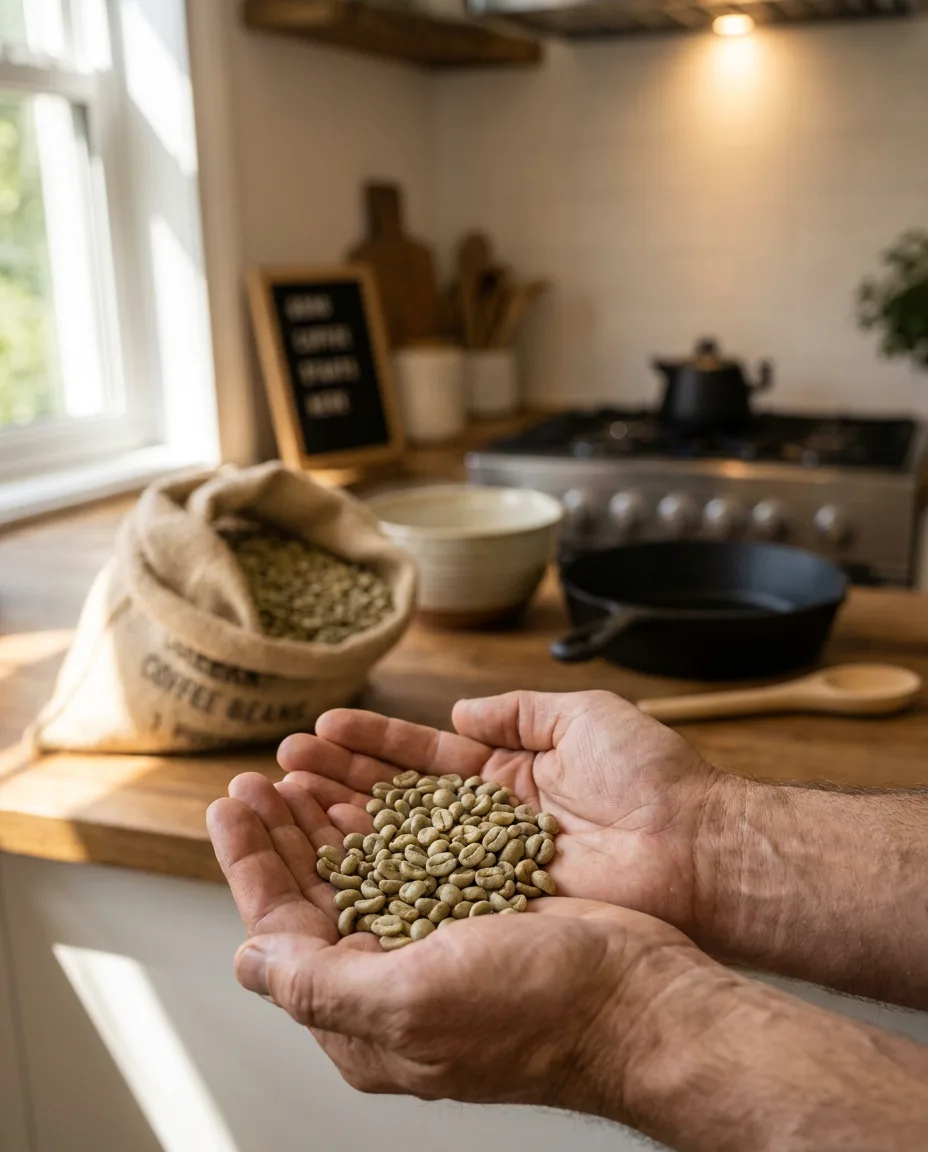
The book starts you on a stovetop skillet because that's what almost everyone already has. No purchase required. The guide is all sensory cues: watch the beans shift from tan to milk chocolate, listen for first crack, a loud popping sound that arrives around the four-to-ten minute mark and signals a light roast. You stir, you listen, you pull the beans when the colour and sound tell you to. 'If you can fry an egg without burning it, you can roast coffee.' That's not a sales line. That's the actual skill level required.
If you can fry an egg without burning it, you can roast coffee.
The $20 Popper Solves the Skillet's One Problem
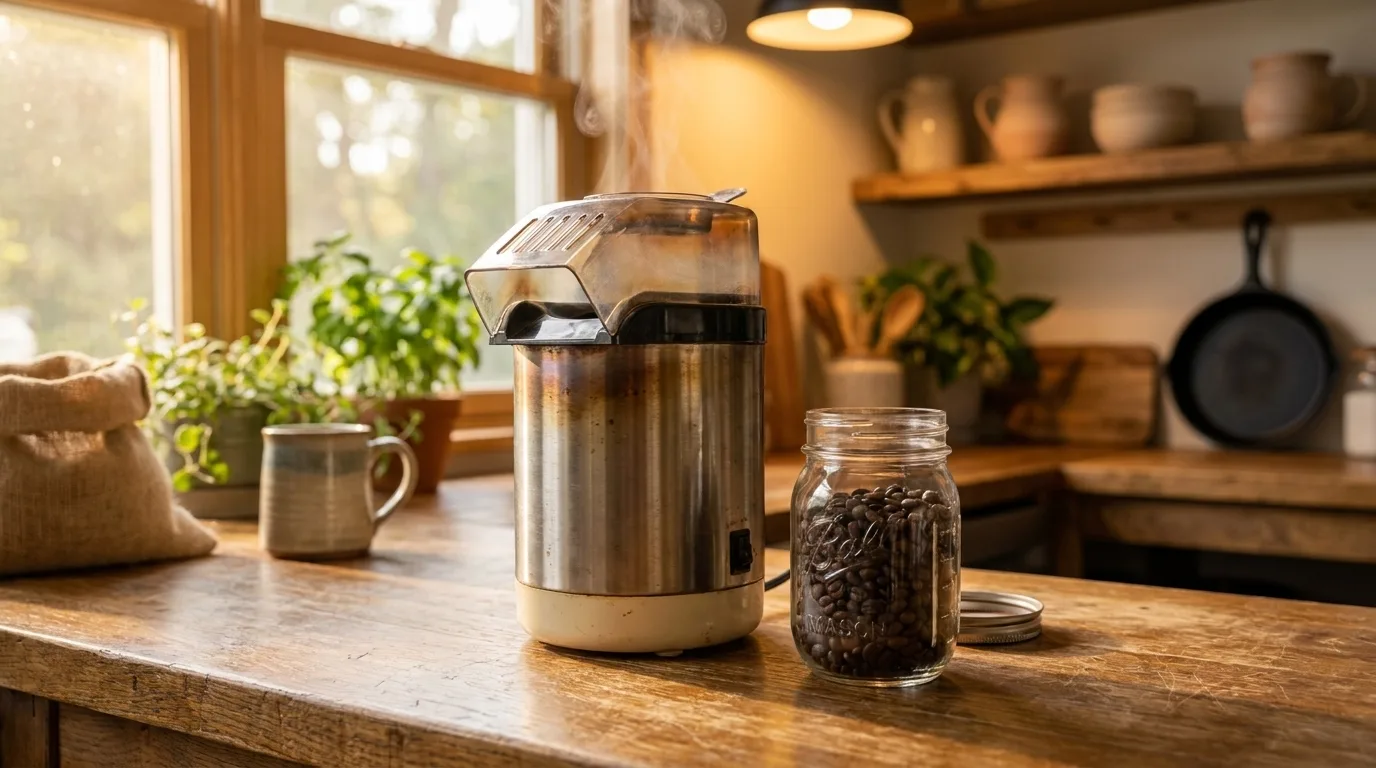
A skillet works, but it asks for constant stirring and makes it harder to hear the cracks clearly. Billings sketches out what the upgrade looks like: a hot-air popcorn popper tumbles the beans automatically, clears the chaff more cleanly, and lets first and second crack ring out without interference. The machine costs $20 to $30 new, and he notes with the kind of specificity that reads like genuine experience that thrift stores accumulate them. You're looking for a cheap, overlooked kitchen appliance that was built for popcorn and turns out to be nearly perfect for this.
Rest the Beans or Ruin the Cup
This is the step most beginners skip, and it costs them. Freshly roasted beans are packed with trapped CO2. Brew them straight off the roast and the gas interferes with extraction. The cup comes out flat or sour and you blame your technique when it's actually just timing. The fix is twelve to twenty-four hours in an open container. 'If you brew too soon, the trapped gas makes your coffee taste flat or sour.' One sentence that saves a lot of wasted batches.
The Roast Log Turns a Lucky Batch Into a Repeatable One
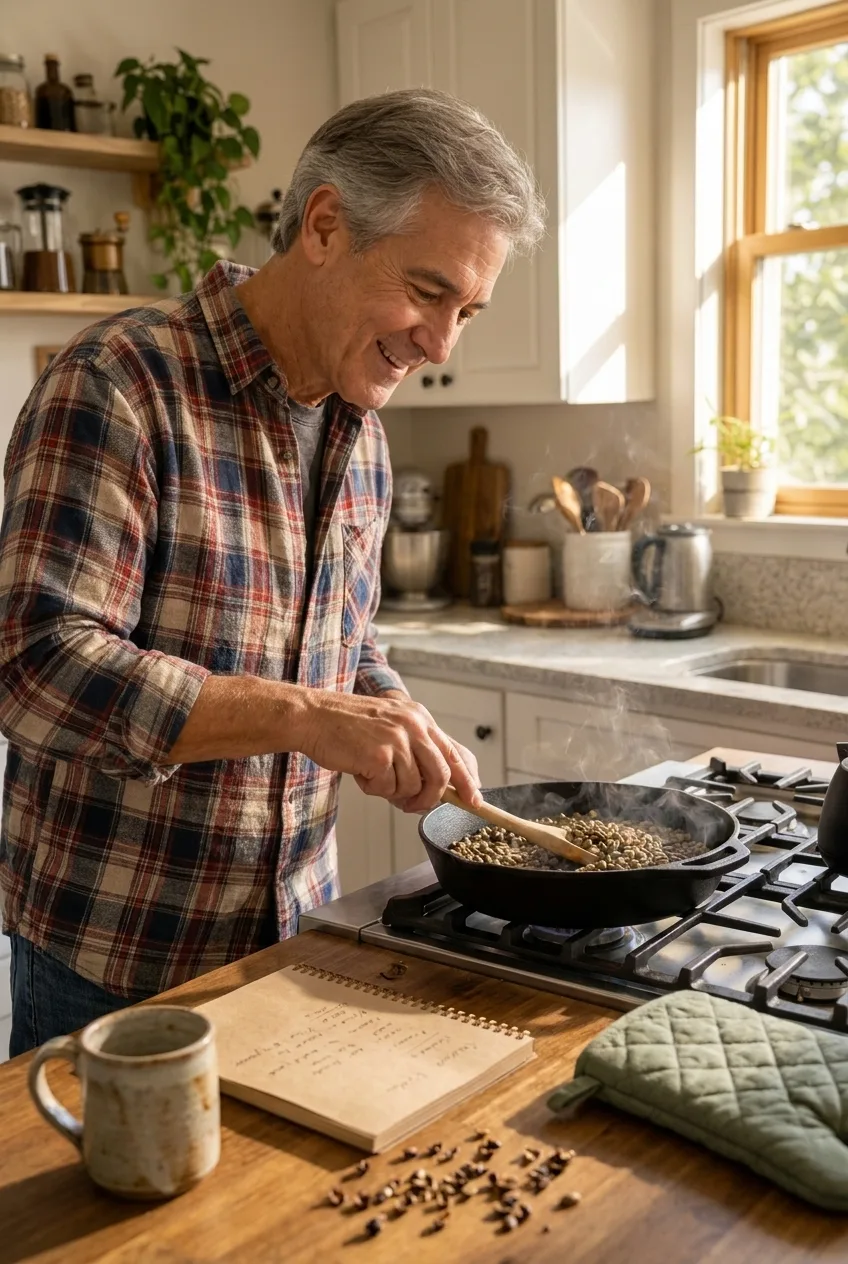
The difference between a great cup you can't recreate and a signature blend you make every week is a few lines written in a notebook. Date, bean origin, roast level, how it tasted, one thing to try next time. Billings is direct about what this does: 'A great blend you can't remember is just a lucky accident. Write it down, and it's yours for good.' Thirty extra seconds of roast time is the kind of small, documented change that turns guesswork into a consistent cup you can actually be proud of.
A great blend you can't remember is just a lucky accident. Write it down, and it's yours for good.
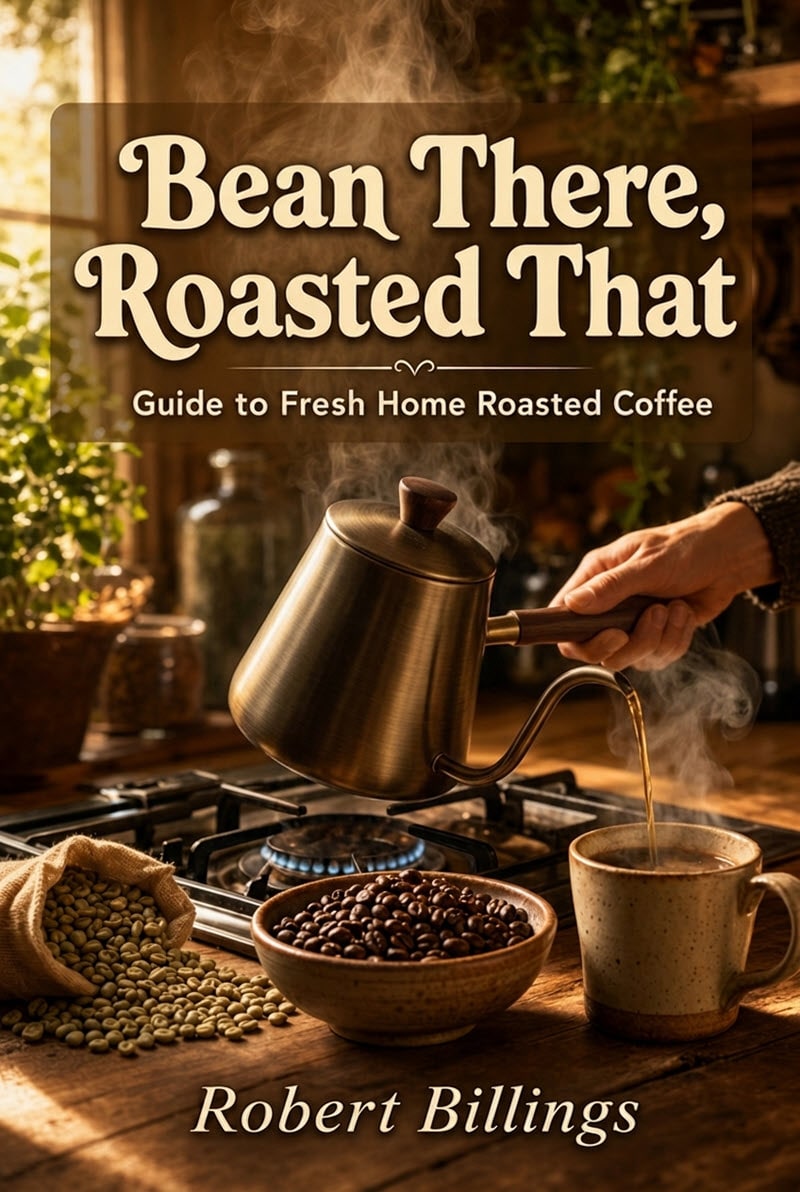
Bean There, Roasted That is the kind of book you read in one sitting and act on the same weekend. It runs you through your first skillet roast step by step, walks the upgrade to a popcorn popper, explains how origin shapes flavour, and gives you the roast-log system that turns early batches into a repeatable process you actually own.
You don't need a course. You don't need a certification. You need one evening with this book and whatever skillet is already in your cupboard. Check what it costs on Amazon and see if it's the right call for you.
Get It on AmazonQuestions people actually ask
I don't own any roasting equipment. Does this actually work for me?
Yes, and the book is built around that exact starting point. Your first roast uses a heavy skillet, which you almost certainly already own. The only optional purchase is a hot-air popcorn popper for the next stage, and the book tells you plainly that a thrift-store find for a few dollars does the job.
Will homeroasted coffee actually taste better, or is this a hobbyist thing?
Store coffee loses flavour fast after roasting, and most bags have already lost a lot before you open them. Beans roasted at home and brewed within a few days are genuinely a different product. The book doesn't oversell this. It just has you taste the difference yourself after your first batch.
Is this going to send me down an expensive rabbit hole?
Honest answer: it might, if you want it to. But it doesn't have to. The book's method works at the skillet and popcorn-popper level indefinitely. Green beans cost about one-third the price of fancy roasted coffee. The book itself and a cheap popper are the only purchases required. Anything beyond that is your choice, and the book says so.
I'm not trying to become a coffee obsessive. Is this still for me?
Probably yes. The book is written for the person who just wants a noticeably better cup on a Tuesday morning, not someone building a home roastery. The whole tone is practical. If you later want to go deeper into origins or blending, the material is there. But the first few chapters stand entirely on their own.
I don't have time to learn something new from scratch.
A single roast runs about 15 minutes start to finish. The book walks you through your first batch in one sitting, using colour and sound as your only guides. There's no prior knowledge assumed and no technique to master before you start.
Is this book going to be out of date fast? Coffee trends move quickly.
The core method here, listening for first and second crack, using colour to judge roast level, resting the beans, keeping a roast log, is based on how coffee actually behaves under heat. That doesn't change with trends. The equipment recommendations are also deliberately low-tech, so nothing in the book requires a product that might be discontinued next year.