Your bag was already stale the morning you opened it. Here is what one weekend batch changed.
You ground the beans, brewed the same way you always do, and it tasted... fine. Not bad. Just fine. You've probably stopped expecting more than that.
Maybe you've already tried the nicer bags. Single-origin. Small-batch. The ones with the story on the label about the farm and the altitude. And they were better, a little. But not the kind of better that justifies what they cost.
That low hum of 'this should be better than it is' — most people just live with it. Not because they don't care. Because they assume the gap is their equipment, or their technique, or just the reality of coffee at home.
The gap is none of those things. It's time. Specifically, the weeks of warehouse and truck time between the roaster and your kitchen. As the book Bean There, Roasted That puts it plainly: 'That store bag is already stale by the time you open it.'
The book — written as a practical, start-tonight guide for everyday home brewers — lays out a simple case. Coffee loses most of its flavour two to three weeks after roasting. Most bags are well past that before you crack the seal. No brew method fixes that. No grinder fixes that. Fresher beans fix that.
What's surprising is what the book says comes next. Not a course. Not a $400 machine. A heavy skillet, a bag of green beans, and about 15 minutes on a Saturday morning. The first roast isn't a project. It's a kitchen task, closer to making toast than to anything that deserves the word 'craft.'
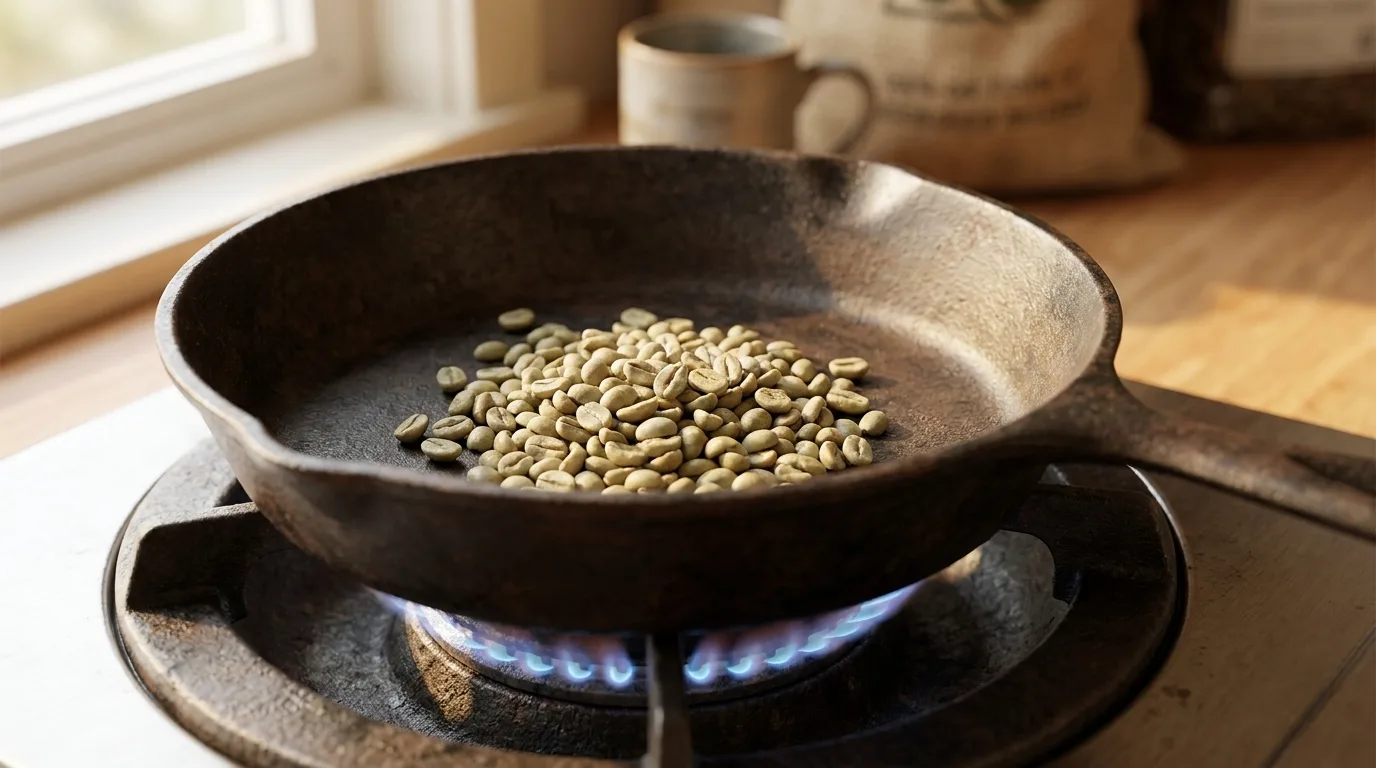
The one step most first-timers skip — and why it wrecks the cup
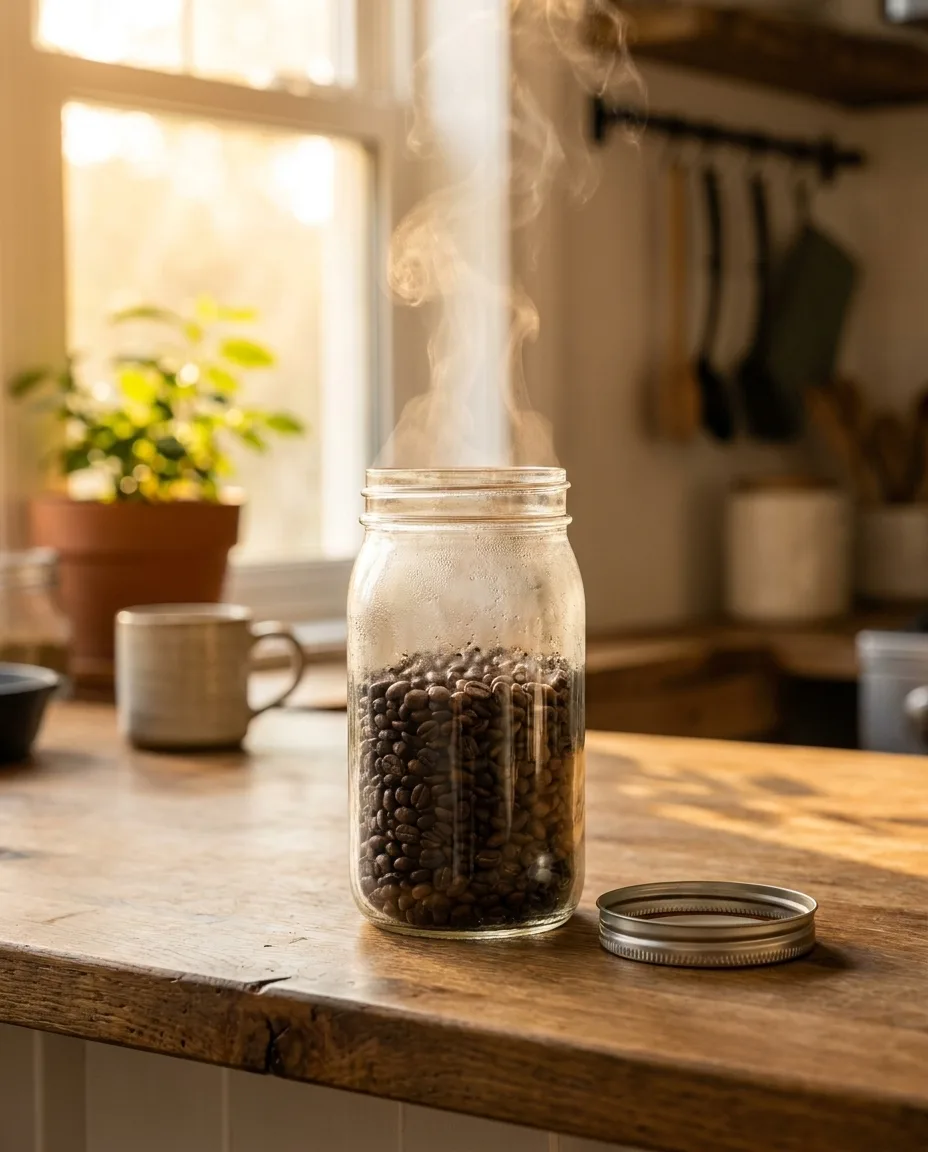
Here is the counter-intuitive part. You finish your first roast, the beans smell incredible, and every instinct says: brew now. The book says: wait. Freshly roasted beans are packed with trapped CO2, and if you brew too soon, that gas makes the cup taste flat or sour. The fix is leaving the cooled beans in an open container for 12 to 24 hours before sealing them. It feels wrong. It's the whole difference between a disappointing first cup and one that stops you mid-sip. As the book puts it, 'Fresh-roasted coffee smells alive — sweet, nutty, a little wild. That smell alone tells you why you went through all this.'
If you brew too soon, the trapped gas makes your coffee taste flat or sour.
You are listening for a sound, and it tells you everything
The book doesn't ask you to measure temperature or time a chart. It asks you to listen. Around four to ten minutes in, the beans start popping, loud, like a small batch of popcorn. That's first crack. A light roast stops there. Keep going and a quieter, static-like crackling begins. That's second crack, and that's dark. Colour backs up what you hear: tan gives way to milk chocolate, then dark brown. 'Sixty to ninety seconds is the whole difference. Small change, big result.' You're not guessing. You're reading cues that are hard to miss once you know what to listen for.
Sixty to ninety seconds is the whole difference. Small change, big result.
A $20 popcorn popper removes the one annoying part of the skillet
The skillet works fine for a first roast. But it asks you to stir constantly so the beans don't scorch on one side. The upgrade the book describes costs twenty to thirty dollars at any big-box store: a hot-air popcorn popper. It tumbles the beans automatically, clears the papery chaff more cleanly, and makes first and second crack easier to hear because you're not scraping a spoon on cast iron the whole time. More control, less work. The skillet earns its place as the starting point. The popper earns its place as the tool most people stick with.
Where the beans come from changes the cup as much as how dark you roast them
Same roast level, different origin, completely different coffee. The book walks through Colombian beans — balanced, nutty, forgiving for beginners — then introduces Ethiopian beans, which is where things get genuinely strange in a good way. 'Roast them right and the cup can taste like blueberry, like jasmine flowers, like a squeeze of citrus. The first time most people taste it, they ask, "Is there fruit juice in here?" Nope. That flavor comes straight from the bean.' The flavour isn't added. It was always there. The commercial supply chain just aged it out before you got to it.
Roast them right and the cup can taste like blueberry, like jasmine flowers, like a squeeze of citrus.
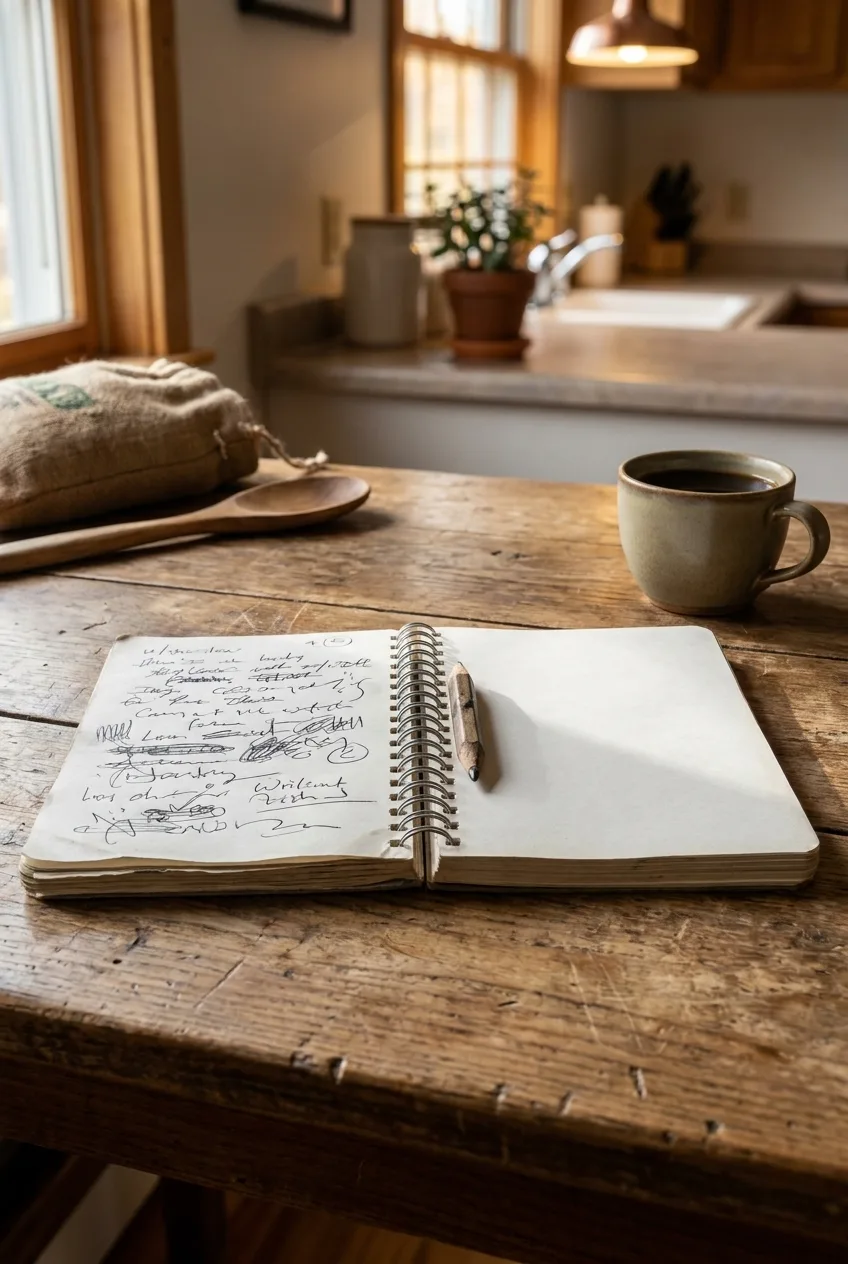
Writing down four things turns a lucky batch into your own recipe
The book describes a roast log: date, origin, roast level, a few flavour words. That's it. No jargon required. The point is that a small, documented tweak — say, 30 extra seconds before you pull the beans — is the difference between a cup you can't repeat and one that becomes the thing you make every weekend. 'A great blend you can't remember is just a lucky accident. Write it down, and it's yours for good.' The log is what separates a one-time experiment from an actual skill.
A great blend you can't remember is just a lucky accident. Write it down, and it's yours for good.
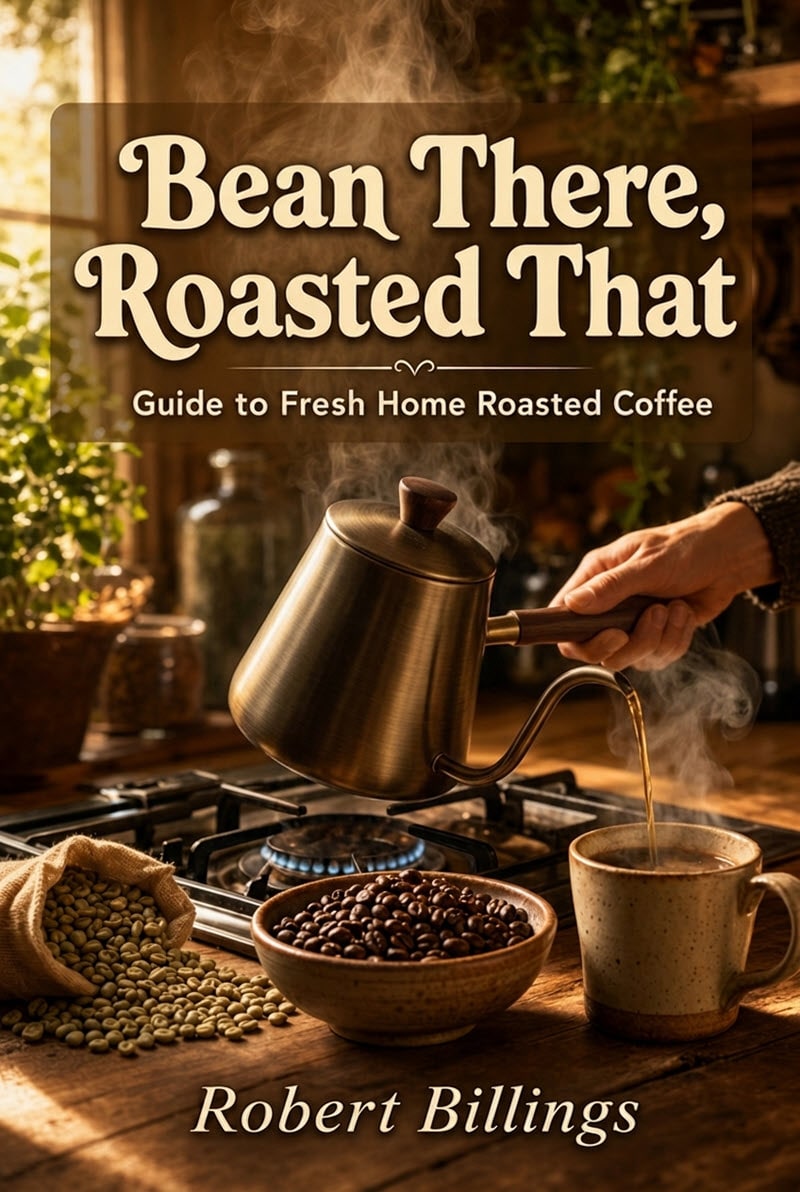
Bean There, Roasted That is a short, practical guide built for someone who already brews at home and wants genuinely better coffee, not a new hobby to manage.
It walks you through your first skillet roast in one sitting, tells you exactly what to listen for, explains the degassing step most people skip, and gives you a simple roast log to make each batch better than the last. Colombian to Ethiopian to your own named blend, if you want to go that far. Nothing in the book requires gear you don't already own, and the one optional upgrade costs less than a bag of the fancy stuff.
See what it costs on Amazon and decide for yourself.
Get It on AmazonQuestions people actually ask
I don't have any roasting equipment. Does this actually work with stuff I already own?
Your first roast uses a heavy skillet and a wooden spoon. If you have those, you can start tonight. The optional upgrade the book describes is a hot-air popcorn popper, twenty to thirty dollars at any big-box store or less at a thrift shop. No specialist gear is required at any point in the book.
I don't have time to learn something new from scratch.
A single roast runs about 15 minutes start to finish. 'A single roast takes about 15 minutes from start to finish. That's it. You're not signing up for an all-day project.' The book walks you through your first batch in one sitting. There's no course to finish before you begin.
Is home-roasted coffee actually better, or is this just a hobbyist thing?
Store coffee starts losing flavour two to three weeks after roasting. Most bags travel through warehouses and trucks well beyond that before they reach you. Home-roasted beans brewed within days of roasting are, as the book puts it, 'a different thing entirely.' That's not a hobbyist claim. It's a supply-chain reality.
Will I just ruin the beans and waste money?
The book starts you on Colombian beans specifically because they're forgiving. A little off on timing and they still taste good. First batches are 100 to 150 grams, so even a bad one costs almost nothing to redo. Green beans also keep for up to a year, so there's no pressure to rush through them.
Is this going to cost me more in the long run?
Honestly, probably not. Green beans cost about one-third the price of fancy roasted coffee and keep for up to a year. The book itself and a popcorn popper are the only purchases you need to make. If you later want a drum roaster or rare microlot beans, that's a choice the book describes plainly, not a requirement.
Is this book for serious coffee people, or can a normal person use it?
It's written for someone who already brews at home and is mildly frustrated with the gap between what they pay and what they taste. No barista knowledge assumed. No special vocabulary required. If you've ever said 'I spend so much on coffee and it's still just... fine,' this book is aimed exactly at you. It's not for people who already roast.