You've Been Buying Stale Coffee. Here's the 15-Minute Fix That Costs a Third of the Price.
You already grind your own beans. You've tried the pour-over, the French press, the subscription box from that small-batch roaster with the nice packaging. You've paid serious money for single-origin bags with tasting notes printed on the label. And every morning you make a cup that's... fine. Maybe good, some days. But not quite the thing you were promised.
That quiet gap between what you spend and what you taste? It's not your brew method. It's not your grinder. It's not even the beans. It's when those beans were roasted, and what happened to them between that roaster and your kitchen. Coffee starts losing flavour two to three weeks after roasting. Most bags sit in warehouses and ride in trucks before they ever reach a shelf. By the time you open one, the best of it is already gone. As the book puts it plainly: "That store bag is already stale by the time you open it."
Nobody told you that. The bag certainly didn't.
A book called Bean There, Roasted That by Robert Billings makes the case that fixing this is a 15-minute kitchen task, not a craft obsession. Not a hobby that needs a dedicated corner of your garage. Not a course you sign up for. A skillet, some green beans, and one read-through of the first chapter.
The premise is blunt: roasting your own coffee at home produces a genuinely different product. Not a marginal upgrade. "Fresh-roasted coffee is a different thing entirely. It's brighter, sweeter, and full of smells you didn't know coffee had. Once you taste it, the old way feels flat." Billings builds the book around that gap, starting from a stovetop skillet any home cook already owns and working up through a $20 popcorn popper that changes everything about the process.
And the cost side is just as plain. "Raw coffee beans — we call them green beans — cost about one-third the price of fancy roasted coffee." They keep for up to a year. You roast small batches as you need them. The math is not complicated.
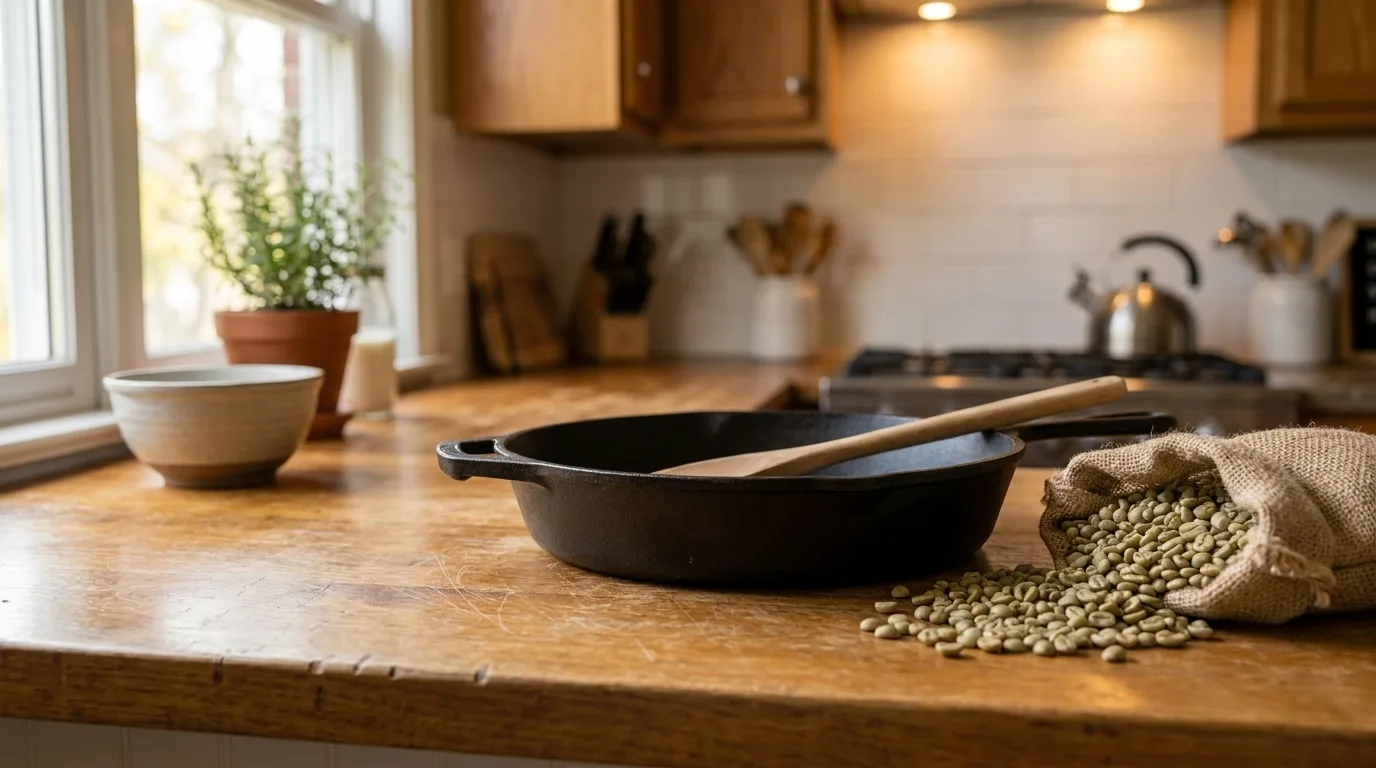
Your ears tell you when to stop.
You don't need a thermometer. You don't need a timer on your phone. Billings walks you through two sounds that do all the work. First crack comes around four to ten minutes in: a loud pop, like popcorn, that signals a light roast is ready. Keep going and a quieter, static-like second crack marks dark territory. Colour backs it up, shifting from tan to milk chocolate to dark brown. Between those two cues, you have full control over the flavour of every batch. "Sixty to ninety seconds is the whole difference. Small change, big result."
Sixty to ninety seconds is the whole difference. Small change, big result.
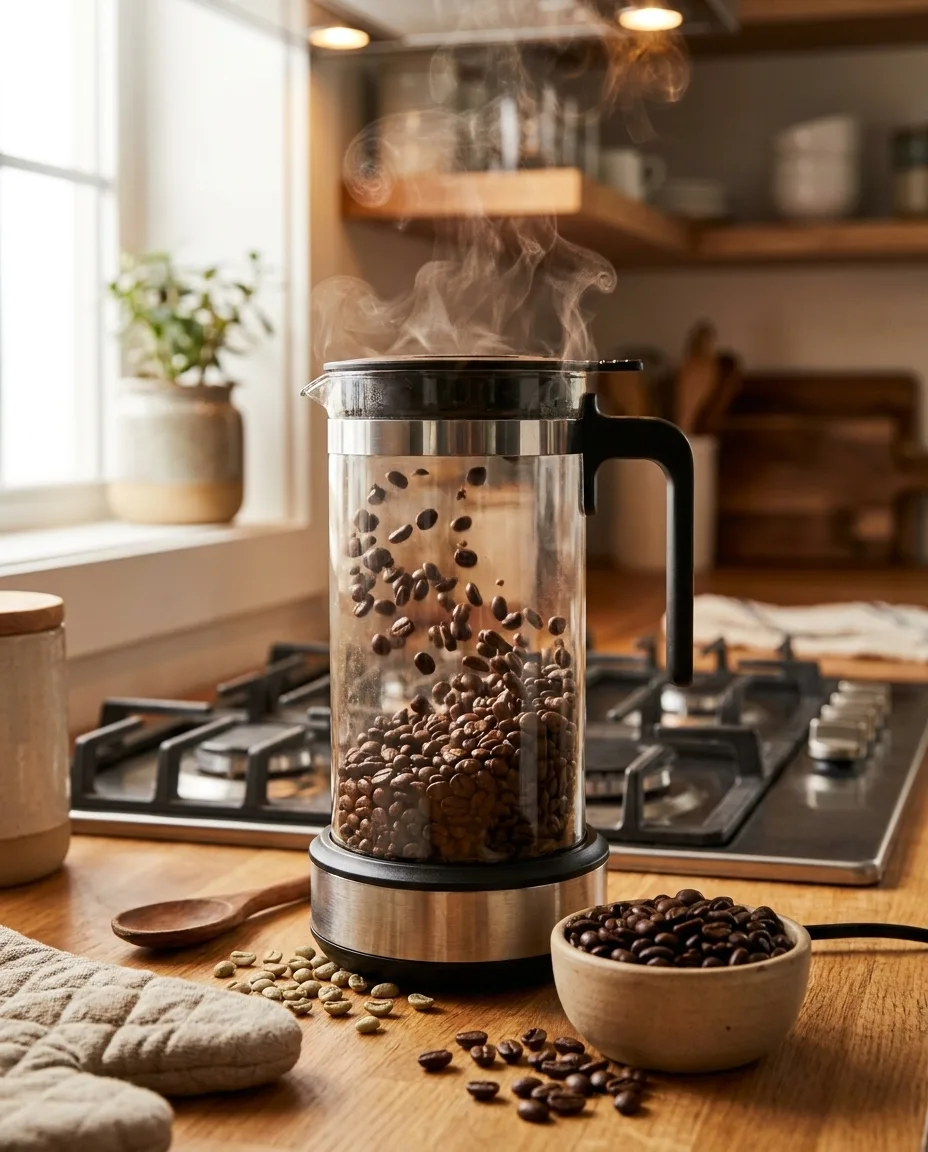
The step most beginners skip (and why it matters).
Freshly roasted beans are full of trapped CO2. Brew them right away and the gas fights back. "If you brew too soon, the trapped gas makes your coffee taste flat or sour." The fix is simple: rest the beans in an open container for 12 to 24 hours before brewing. That's it. Most people have never heard this, which is why their first attempt at fresh beans still disappoints them. The book is specific about it because the result depends on it.
The stirring gets old. Here's what replaces it.
The skillet method works. Billings is honest that it has one real weakness: you're stirring for ten minutes straight, and that gets old fast. A hot-air popcorn popper — the kind that costs $20 to $30 at any big-box store, or less at a thrift shop — tumbles the beans automatically. No stirring. Chaff blows off more cleanly. First and second crack are easier to hear because your hands are free. More control, less effort. It's the upgrade that actually earns that word.
More control, less effort.
Origin is a whole second lever you didn't know you had.
Colombian beans are the book's recommended starting point: balanced, forgiving, nutty. Get comfortable there, then try Ethiopian. The flavour shift is not subtle. "Roast them right and the cup can taste like blueberry, like jasmine flowers, like a squeeze of citrus. The first time most people taste it, they ask, 'Is there fruit juice in here?' Nope. That flavor comes straight from the bean." Same roasting process. Completely different cup. That's not a hobbyist's trick. That's just what green beans from different places taste like when they're fresh.
The first time most people taste it, they ask, "Is there fruit juice in here?
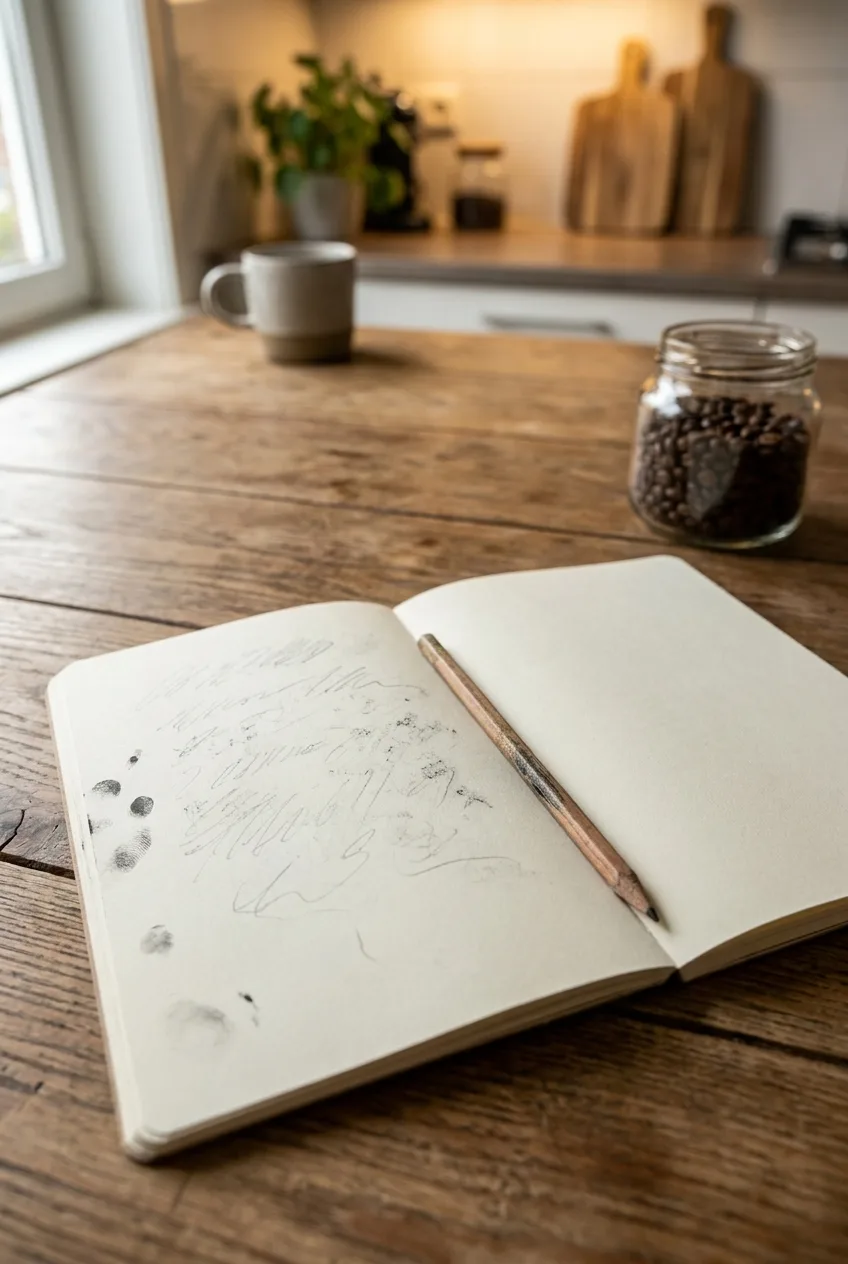
A roast log turns a lucky batch into your signature.
After each roast you write down the origin, the time, a few flavour words, and what you'd change. That's the whole log. Small, documented adjustments — 30 extra seconds, a slightly different origin, a different brew ratio — turn guesswork into a repeatable result you own. "A great blend you can't remember is just a lucky accident. Write it down, and it's yours for good." The book gives you the format. The Saturday morning batch becomes the Tuesday ritual.
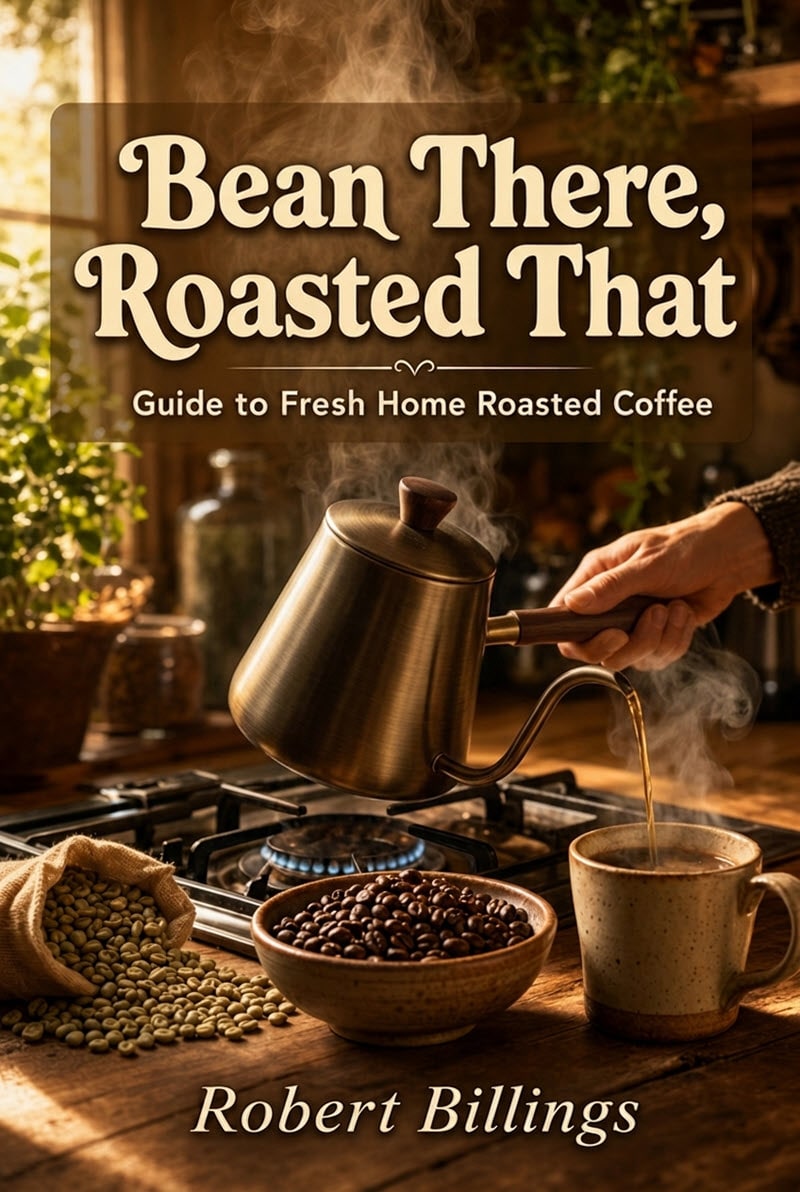
Bean There, Roasted That walks you through your first batch in one sitting. Skillet first, then the popcorn popper, then origins, blending, and a roast log that makes every subsequent batch better than the last. No background knowledge required. No specialist purchases at any stage unless you choose them later.
"A single roast takes about 15 minutes from start to finish. That's it. You're not signing up for an all-day project." That's the whole pitch. The book delivers on it.
See what it costs on Amazon and decide for yourself. If you own a heavy pan and a free Saturday morning, you already have enough to start.
Get It on AmazonQuestions people actually ask
I don't have any roasting equipment. Does this work for a complete beginner?
Yes, and that's the specific person the book is written for. The first method is a heavy skillet you almost certainly already own. The upgrade is a hot-air popcorn popper at $20 to $30. No specialist gear is required at any point in the book. If you want a drum roaster later, Billings mentions that option, but it's a choice, not a requirement.
Will home-roasted coffee actually taste better, or is this a hobbyist placebo?
Store coffee loses flavour two to three weeks after roasting, and most bags have already travelled through warehouses before you open them. Home-roasted beans brewed within days of roasting are a genuinely different product. The book's word for it is accurate: "a different thing entirely." Not a marginal upgrade. Something noticeably different in the cup.
I'm not trying to become obsessed with coffee. Is this going to pull me into a whole thing?
Honestly, it might, because the results are good enough to make you curious. But the book is built so that it doesn't have to. Skillet, popcorn popper, roast log. That's a complete setup that costs under $30 total and produces excellent coffee indefinitely. Everything beyond that is optional and clearly labelled as such.
What if I mess up the first batch and ruin the beans?
Billings starts you on Colombian beans specifically because they're forgiving. A little off on timing and they still taste good. First batches are small, 100 to 150 grams, so even a genuinely bad roast costs very little to redo. The most common mistake, pulling beans before first crack finishes, is flagged clearly in the book before you get there.
Is this going to save me money, or will I spend more chasing the hobby?
Green beans cost about one-third the price of specialty roasted coffee and keep for up to a year. The book and a popcorn popper are the only purchases you need to make. If you later want rarer beans or more precise equipment, that's a choice the book is transparent about. The savings are real from the first batch, not after some break-even point months away.
Is this book already out of date? Coffee trends move fast.
The core of this book is sensory: colour, sound, smell. Those don't change. First crack still sounds the same. Colombian beans still taste nutty. Ethiopian still tastes like fruit. The method is built on things that are true about coffee itself, not on gear brands or trends that cycle every few years. It'll be just as useful next year.