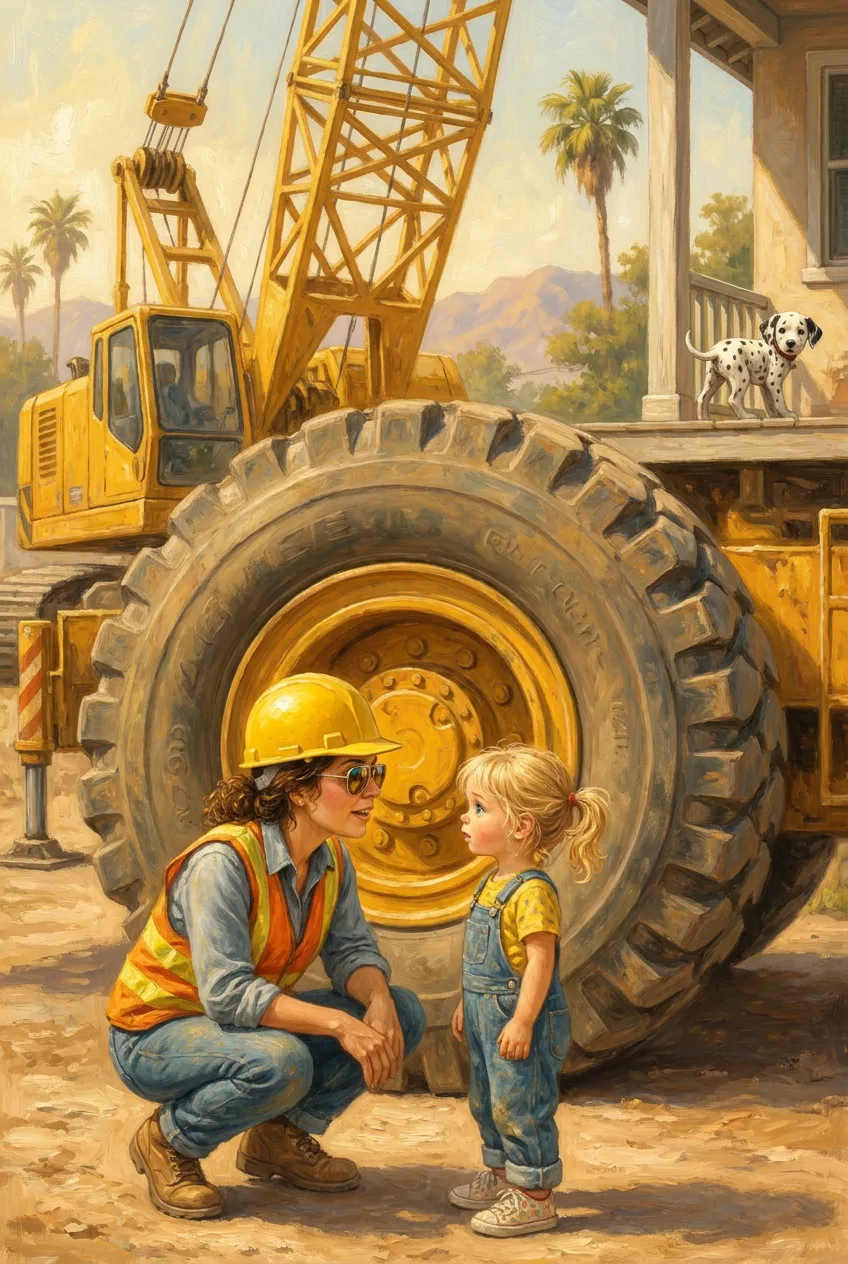
Most gratitude books tell kids what to feel. This one just shows a little girl watching a crane.
It's 110 degrees and the AC just quit. The repairperson's truck is in the driveway, a stranger is on your roof, and your kid is watching from the window with big, worried eyes. You don't know what to say. So you say nothing, the moment passes, and that's that.
That's how it usually goes. The work happens, the cool air comes back, and everyone moves on without knowing a single thing about the person who made it happen. No name. No story. No idea what it cost them to be up there in that heat.
You've tried the gratitude conversation before. The thank-you notes, the 'appreciate what you have' talk, the picture books with the lesson stapled right to the last page. It lands for maybe a week. Then the AC hums and the dog is comfortable and nobody wonders about any of it.
Cool As Can Be: Hazel and the Air Lily Crew, written by Scott Rogers, does something those other books don't bother with. It doesn't tell a child to be grateful. It takes her outside to watch the crane pull up, meet the crew, and spend a whole blazing day trying to be useful.
Hazel isn't a lesson. She's a kid who's worried about the workers in the heat, who counts the water bottles in the cooler, who asks the kinds of questions most adults have already stopped asking. And by the last page, she knows something most grown-ups don't: who climbed a blazing roof so her family could sleep cool. The book never announces that as a moral. It just lets her sit with it.
That's the shift. Not a lecture about hard work. A story about real people, one enormous crane, a dog named Pepper who keeps flopping over in the heat, and a little girl who discovers that slow, careful, loving work is behind every comfort she's ever taken for granted.

The old way: hope gratitude shows up on its own
Most of us grew up around comfort — climate control, hot water, a house that just works — and nobody ever explained the labor behind it. So we grew up assuming it. Then we have kids, and we watch them assume it too, and we reach for a book that says 'be thankful' in big friendly letters. It doesn't stick because the child has nothing to attach it to. Gratitude needs a face. It needs a story. Hazel gives both.
Most people, Hazel guessed, wouldn't know any of that. They'd feel the cool air and never wonder where it came from, or who climbed a blazing roof to give it to them.
What the book does differently: it says thank you before the work even starts
Early in the story, Hazel's dad packs a cooler full of iced water bottles for the crew. Before they've done a single thing. Hazel asks why, and he explains: "It's a gift. For the crew. They'll be out in the heat all day, so we keep their water cold. That's how we say thank you before they even start." That one moment reframes the whole book. Gratitude isn't a response to a finished favor. It's what you feel when you understand what someone is about to do for you.
That's how we say thank you before they even start.
The old way: slow is just slow
Crane operator Deb has three rules, and they're not rules a safety manual invented. They're the rules of someone who has watched what happens when you skip them. "Never rush the load. Heavy things need time. Push too fast, and they push back." A child listening to that isn't learning about cranes. They're learning that the most careful person on the job is usually the most skilled one. Slow isn't a flaw in a person. It's a discipline. That idea is genuinely hard to teach. Deb teaches it in three sentences.
Slow isn't lazy, little one. Slow is how you keep everybody safe.
What the book does differently: it makes the invisible visible and personal
Lead worker Asher tells Hazel that his grandmother Lily founded the company because she believed "keeping a family cool on hot days is a way of loving them." That's not a tagline. It's a philosophy that turns an ordinary service call into something with weight and history behind it. Kids who hear that story don't just see an HVAC crew. They see people who showed up because someone they loved built something worth carrying forward. "Every single job. So she's always on the roof with us." That line hits adults harder than kids, by the way.
The after-state: a Tuesday night in July
It's the middle of summer. The AC hums. Your daughter hears it, looks up from her pillow, and says, "That's like Hazel's house." You read the last page. She waves at the ceiling. You don't say a word about gratitude, because you don't have to. She already feels it. "They had done it the Lily way: slow, and steady, and full of care." You close the book and both of you just sit in the cool air for a second. That's the whole thing. That's what it's for.
They had done it the Lily way: slow, and steady, and full of care.

Cool As Can Be: Hazel and the Air Lily Crew is a picture book for children roughly ages 4 to 8, built for reading aloud. It takes about 15 minutes start to finish, which is the right length for a bedtime read.
What you're getting is a story where the lesson arrives on its own, without anyone announcing it. Hazel worries, Hazel helps, the crew does extraordinary ordinary work, and by the last page the cool air in the room feels different. That's the whole mechanism. It doesn't require a follow-up conversation. It does the work.
If you've been looking for something that treats your child like a person who can handle a real idea, and treats you like a reader who doesn't need everything explained twice, visit the page below and take a look.
Preview this bookQuestions people actually ask
Is this actually a story, or is it just an HVAC manual dressed up for kids?
It's a real story. Hazel is worried about the workers, she finds her own way to help, and the crew has a grandmother, a philosophy, and three rules they live by. The AC installation is the backdrop, not the point. The point is that slow, careful, loving work is behind every comfort we take for granted.
My kid has no interest in air conditioners. Why would this hold their attention?
Because Hazel isn't interested in air conditioners either. She's interested in the people, the enormous crane, a dog named Pepper who keeps flopping over in the heat, and whether the ice is going to melt before the crew needs it. The equipment is just what the interesting people happen to be working on.
Won't this only resonate with kids in hot climates who've actually seen rooftop AC units?
The heat is specific and vivid, which is exactly what makes it land everywhere, not just in the desert. A child in a cold climate who has never seen a rooftop unit still knows what it feels like to be cared for by someone they've never met. That's what the book is actually about.
There are a dozen picture books about gratitude and hard work. What makes this one different?
Most of them tell the child what to feel. This one shows Hazel doing something real, watching the cooler and worrying out loud, and then has a grown-up confirm that her worry was actually help. The gratitude isn't announced. It arrives on its own. That's genuinely harder to find.
Will it work for a 4-year-old, or is it aimed at older kids?
Honestly, the thermostat-as-traffic-light moment and the crane rules are built for curious 6-to-8-year-olds who want real explanations. A 4-year-old will follow Hazel and Pepper and the ice, and miss some of the middle. If your child is on the younger end, you'll paraphrase a few passages. That's not a flaw. That's a read-aloud.
I'm tired of books where the lesson hits you over the head on the last page. Is this one of those?
No. The book never announces its moral. Nobody turns to the reader and says 'and that is why we should be grateful.' Hazel just sits in the cool air at the end of the day knowing something she didn't know that morning. The reader gets to sit there with her. That's it.